The Indian version of The Godfather, with the focus on SARKAR, an Indian politician. 印度版的《教父》,可能会成为印度最成功的黑帮电影…… 这里没有对与错,只有权利。Suresh Nagre是一位“Sarkar”,拥有一帮职业杀手,影响着法律标准的界定。他是权利的中心,他能够罢免内阁,并将其他人换上。他是笃信宗教的,但他不会因此而内疚。他可以成为毁灭性人物,只要他愿意,他可以让整个城市投入烈焰中。他的家庭由妻子,儿子Vishnu 和Shankar,及Vishnu的妻子和儿子组成。他的房屋就像是个堡垒,由忠心耿耿的匪军保护着。我们只能认为Sarkar是从天堂落入凡间的,因为没有其任何背景。此外Sarkar从不卷入被他帮助过的人士间的金融交易,甚至拒绝贿赂来避免非法运作的发生。而这必然导致分歧...
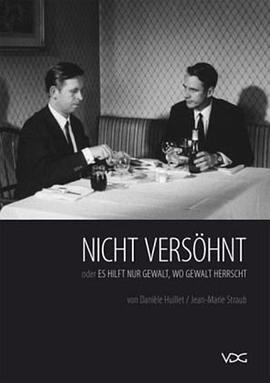
The subtitle of Jean-Marie Straub and Danièle Huillet’s first feature, from 1965, “Only Violence Helps Where Violence Reigns,” suggests the fierce political program evoked by their rigorous aesthetic. The pretext of the film, set in Cologne, is Heinrich Böll’s novel “Billiards at Half Past Nine,” which they strip down to a handful of stark events and film with a confrontational angularity akin to Bartók’s music that adorns the soundtrack. The subtlest of cues accompany the story’s complex flashbacks. The middle-aged Robert Fähmel tells a young hotel bellhop of persecutions under the Third Reich; his elderly father, Heinrich, an architect famed for a local abbey, recalls the militarism of the First World War, when his wife, Johanna, incurred trouble for insulting the Kaiser. A third-generation Fähmel is considering architecture, just as the exiled brother of Robert’s late wife, returns, only to be met by their former torturer, now a West German official taking part in a celebratory parade of war veterans. Straub and Huillet make the layers of history live in the present tense, which they judge severely. The tamped-down acting and the spare, tense visual rhetoric suggest a state of moral crisis as well as the response—as much in style as in substance—that it demands.
The eccentric professor Collins lives completely secluded in his chaotic apartment. When the model Penny moves in next to him, he becomes fascinated of her. He drills holes in her walls and ceiling and peeps on her day and night. He loses himself in daydreams and delusions.